
Antiscalant
What is an Antiscalant?
Antiscalants are specialized chemicals used in water treatment processes, particularly in reverse osmosis (RO) systems, to prevent the formation and accumulation of scale. The scale consists of sparingly soluble salts such as calcium carbonate, calcium sulphate, and silica that can precipitate out of water and adhere to the surfaces of membranes and other equipment. This scaling can significantly reduce the efficiency of the system, increase energy consumption, and require frequent maintenance or replacement of membranes.
How Do Antiscalants Work?
Antiscalants work by interfering with the crystallization process of these sparingly soluble salts. They do this through various mechanisms:
Threshold Inhibition: They keep salts dissolved in water at concentrations higher than their normal solubility limits.
Crystal Distortion: They distort the crystal structure of forming scale, making it less likely to adhere to surfaces.
Dispersion: They prevent the aggregation of particles, keeping them suspended in water and preventing them from forming larger scale deposits.


Nelson Tech® antiscalants and dispersants are multicomponent formulations that allow higher RO system recovery rates and reduce cleaning frequency. Nelson antiscalants inhibit scale while also dispersing colloidal particles. The inhibition and dispersant properties of Nelson Tech® products help extend system run times, reduce cleaning frequency and increase the productive life of RO elements.
Why Our Antiscalants Are the Best Quality
Advanced Formulations: Our antiscalants utilize cutting-edge low molecular weight nano-composite technology. This innovative approach enhances the performance of our products, allowing for superior scale prevention and longer membrane life.
High Inhibition Capability: Our products demonstrate exceptional inhibition capabilities against challenging scales, including high sulfate scales such as SESI. This makes them highly effective in a wide range of water chemistries and applications.
Functional Group Distribution: The high-density distribution of functional groups in our antiscalants ensures maximum interaction with potential scale-forming ions. This results in more efficient scale prevention and better overall system performance.
Tolerance to Hardness and Alkalinity: Our antiscalants are designed to perform exceptionally well in water with high hardness and alkalinity. This makes them suitable for diverse water sources and ensures consistent performance even under challenging conditions.
Eco-Friendly Solutions: Committed to sustainability, our formulations are environmentally friendly. They minimize the ecological footprint of water treatment processes while maintaining high efficacy, contributing to greener and more sustainable water management practices.
Research and Development: With a strong focus on research and development, our team continuously innovates to improve the effectiveness and environmental profile of our products. Our collaboration with leading institutions, such as the University of British Columbia, ensures that we stay at the forefront of technological advancements in the industry.
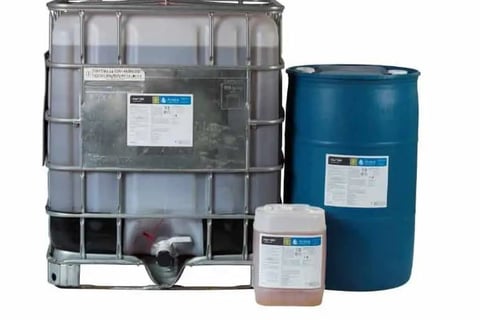
Products we offer:
NS-R500
NS-R400
NS-R101
NS-R102
Ultrafiltration Membrane
What is an ultrafiltration membrane?
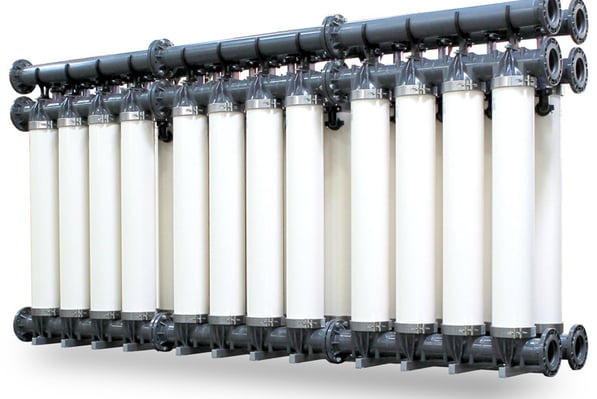
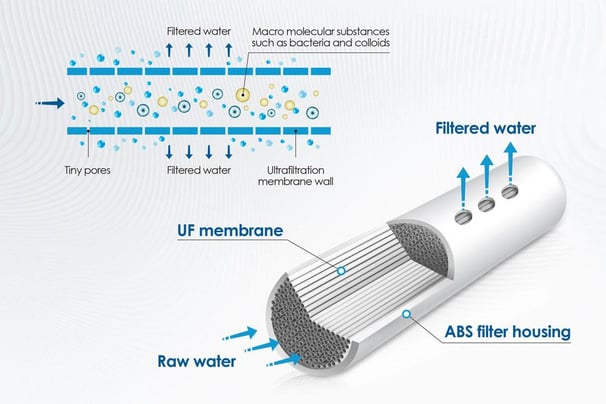
An ultrafiltration membrane is a key component in advanced water purification devices. These devices consist of cylindrical modules filled with hollow fiber membranes, each containing thousands of tiny pores. The semipermeable membrane material, typically made from polymers such as polyethersulfone (PES) or polyvinylidene fluoride (PVDF), allows water and small molecules to pass through while blocking larger particles, bacteria, and viruses. The devices operate under low pressure, making them energy-efficient and cost-effective. Ultrafiltration devices are engineered to provide high flow rates and robust performance, ensuring reliable filtration and easy maintenance. The result is the production of high-quality, purified water, free from contaminants.
What types of ultrafiltration membranes are there?
Hollow Fiber Membranes:
Description: Composed of thousands of fine, hollow fibers bundled together.
Advantages: Provides a high surface area for filtration, suitable for high flow rates and large-scale industrial applications. Offers efficient filtration with good fouling resistance.
Applications: Industrial wastewater treatment, process water purification, and cooling water systems.
Flat Sheet Membranes:
Description: Membrane material is arranged in flat sheets within a module.
Advantages: Easy to clean and maintain, allows for high permeability and effective filtration. Suitable for applications requiring frequent maintenance.
Applications: Pre-treatment for reverse osmosis, water recycling systems, and small to medium-scale industrial processes.
Tubular Membranes:
Description: Features tubular structures through which feed water flows, with permeate collected on the outside.
Advantages: Highly resistant to fouling and clogging, making it ideal for handling high-viscosity and high-turbidity liquids. Durable and easy to clean.
Applications: Industrial wastewater treatment, chemical processing, and food and beverage industry.
Capillary Membranes:
Description: Similar to hollow fiber membranes but with larger diameters.
Advantages: Provides high flow rates and is effective for filtering water with moderate turbidity levels. Offers good mechanical strength and fouling resistance.
Applications: Industrial water purification, pretreatment for reverse osmosis systems, and membrane bioreactors.
Each type of membrane is tailored to meet specific industrial requirements, balancing factors like flow rate, fouling resistance, and ease of maintenance.
What is Ultrafiltration? How an Ultrafiltration Membrane Works?
Understanding the principles and functionality of an ultrafiltration (UF) system is crucial when selecting the most suitable one for your needs. Ultrafiltration (UF) is a highly effective water purification method that employs a semipermeable membrane to remove particles and contaminants. The UF membrane acts as a selective barrier, distinguishing between two bodies of water with varying characteristics by driving water and its impurities toward the side with lower pressure. Typically, the water inside the membrane is purer than that outside. The process operates at low pressure, making it energy-efficient and cost-effective. UF membranes come in two varieties: coarse and fine. Coarse membranes have a larger surface area, enhancing their filtration efficiency, while fine membranes, despite offering a smaller surface area, are more costly and present greater maintenance challenges. Ultrafiltration is commonly used in various industries, including wastewater treatment, where it helps remove suspended solids and pathogens, ensuring clean and safe water. The result is high-quality, purified water that meets stringent safety standards, suitable for applications ranging from industrial processes to drinking water treatment.
© 2024. All rights reserved.